

Last Updated: November 1, 2026
Quick Summary
Before buying a designer bag, decide how you will use it, then verify provenance, get independent authentication, and confirm the return policy in writing. Inspect corners, handles, hardware and lining, and test the strap and weight. Pay with a method that offers buyer protection.
- Choose a bag by daily use, such as laptop carry, compact evening use or weekend errands.
- Ask for the original receipt and any repair records to establish the bag's provenance.
- Confirm a third-party certificate matches the exact bag's brand, model, size and material.
- Check corners, handles, zips and interior lining, since these wear first and cost most to repair.
- Pay with a credit card or buyer-protected platform, and get the return window in writing.
Table of Contents
- Start With Your Own Use Case, Not the Brand Name
- Questions to Ask Before Buying a Designer Bag
- How to Authenticate a Designer Bag Before You Pay
- Designer Handbag Condition Checklist for Pre-Owned Bags
- Comparing Our Designer Bags by Size, Material and Use
- Are Designer Bags Worth the Investment for You?
- Planning Your Next Designer Bag Purchase
- Frequently Asked Questions
Start With Your Own Use Case, Not the Brand Name
Buying a designer bag well starts with a plain question: what will you actually carry, and where? The designer handbag market is large and growing, with Fortune Business Insights handbag market forecast projecting it to reach $68.86 billion in 2026.
Think about your routine first. Do you need room for a laptop, a phone and a water bottle? Or do you want something compact for dinners and events?
Style matters too. Choose a shape and colour you will reach for again. A neutral tan or black usually pairs with more of your wardrobe than a bold seasonal shade.
Questions to Ask Before Buying a Designer Bag
Before you commit, ask the seller a short set of questions. Clear answers separate a careful purchase from a risky one.
Ask these before you pay:
- What is the exact condition, and are there photos of the corners, handles, interior and hardware?
- Is the bag authenticated, and by whom?
- What is the return policy if the bag does not match its description?
- Does the listing state the dimensions, so you can check fit against your daily items?
- Are the materials clearly named, such as Togo or Epi leather, or canvas?
We recommend getting written answers. A seller who explains the condition clearly is usually easier to trust than one who relies on vague wording.
How to Authenticate a Designer Bag Before You Pay
Authentication is the step most buyers skip, and it is the one that protects your money. Follow this step-by-step verification process while checking a specific bag. Entrupy's guidance on bag authentication describes machine-assisted checks that examine a bag's materials and construction. But a certificate alone is not a buying strategy. The stronger approach is a short, repeatable process that covers provenance, independent verification, payment protection, and a return path before any money moves.
Step 1: Establish provenance before you discuss price
Provenance is the paper trail that explains where the bag came from. Ask the seller for the original receipt, the boutique or authorized-retailer record, and any service or repair paperwork. A bag with a documented history is easier to authenticate and easier to insure. If the seller cannot explain how they acquired the bag, treat that as a yellow flag rather than a dealbreaker, and factor it into your offer.
A common pattern among resale specialists is to separate "documented" from "undocumented" inventory and price accordingly. Undocumented bags can still be genuine, but you are accepting more risk, so the price should reflect it.
Step 2: Request independent authentication, not just a seller claim
Ask whether the bag has been authenticated by a third party and request the certificate or report. Read it carefully: confirm the brand, model, size, material, and serial or date-code details match the exact bag you are buying. A certificate for a similar model is not a certificate for this bag.
If no third-party authentication exists, budget for one. Build any authentication fee into your total cost before you decide the price is attractive.
Step 3: Run your own physical checks
Even with a certificate, inspect the details yourself:
- Stitching: Look for even, consistent stitch spacing with no loose threads or skipped stitches.
- Hardware: Engravings should be crisp and centered, and closures should move smoothly without grinding.
- Labels and serial markings: Confirm they are present and match the brand's standard placement and font.
- Interior: Check the lining and any stamps for neat, consistent printing.
- Materials: Compare grain, weight, and smell against known examples of the same leather or canvas.
Step 4: Protect the payment
Pay with a method that gives you recourse, such as a credit card or a platform with buyer protection. Avoid wire transfers, gift cards, and peer-to-peer payments with no dispute process. Keep the listing, messages, and photos in one place so you can support a claim if the bag does not match its description.
Step 5: Confirm the return window in writing
Before you pay, get the return policy in writing: how many days you have, who pays return shipping, and whether returns are accepted for authenticity disputes as well as condition disputes. A short return window is workable if you can complete authentication quickly; a no-return policy on a high-value bag is a reason to walk away.
The Celine Medium Classic Box is sold with an Entrupy Certificate of Authenticity. Use that as a model for what to ask of any seller: a named authenticator, a certificate you can read, and a return path if the bag does not match. Consulte estos consejos para comprar bolsos de diseñador vintage con seguridad.
Vintage Burberry Pebbled Leather Flap Shoulder Bag, Tan, Pre-Loved →
Designer Handbag Condition Checklist for Pre-Owned Bags
Pre-owned bags can be excellent value, but the condition must match the listing. Read these tips for buying vintage designer bags safely before you buy. Inspect the piece closely, ideally in natural daylight, and work through it in a fixed order so you do not miss the wear that shows up later. The checklist below combines condition inspection with fit and ergonomics, because a bag that is flawless but uncomfortable will stay in its dust bag.
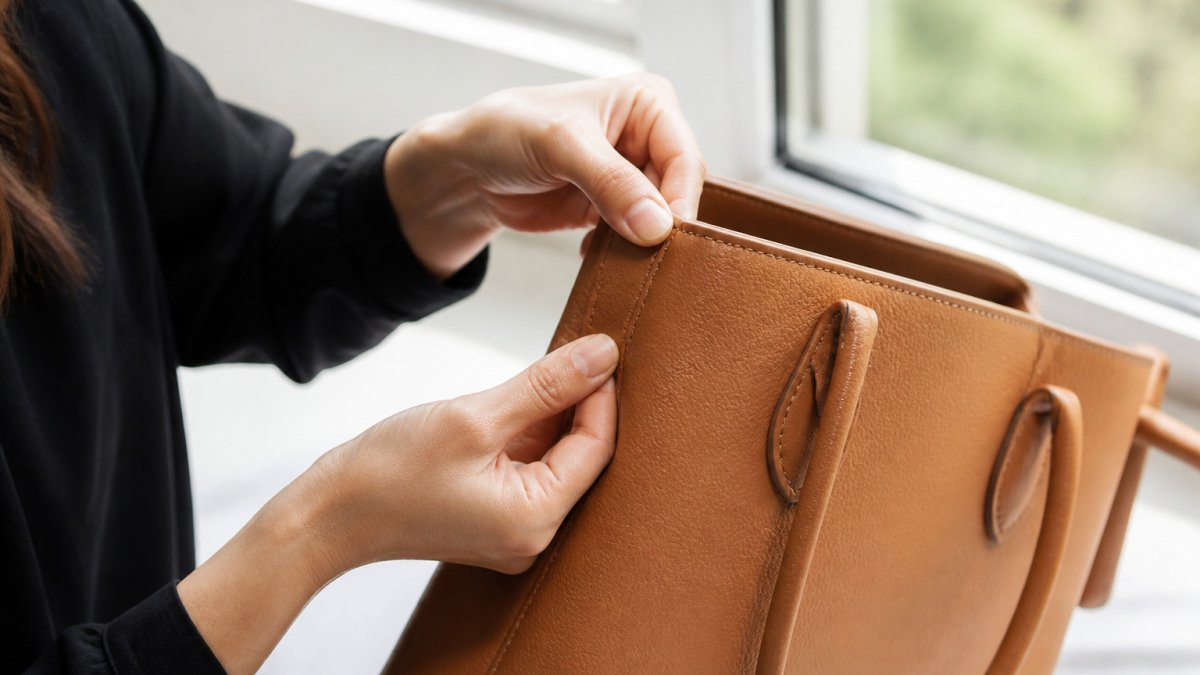
Condition inspection, in order
Start with the areas that wear first and cost the most to repair:
- Corners and base: Look for scuffing, flattening, or exposed piping. Corner repair is one of the more common leather repairs.
- Handles and strap attachments: Check for cracking, stretching, or fraying where the strap meets the bag.
- Leather surface: Look for fading, scratches, staining, and color transfer, especially on light-colored bags.
- Zips, clasps, and turn-locks: Open and close every closure several times. They should move smoothly without catching.
- Interior lining: Check for stains, odor, tears, and peeling, which is common on older coated linings.
- Hardware: Look for tarnish, plating wear, and loose fittings.
- Edges and glazing: Check for cracking or lifting along the painted edges.
Keep in mind that a small amount of patina is normal on quality leather and can add character. The Burberry pebbled leather flap bag, for example, is made in pebbled leather with a soft, natural grain. What matters is that any wear is what the listing describes.
Fit and ergonomics: test the bag the way you will wear it
Condition is only half the decision. Before you commit, put the bag on and test it the way you will actually use it:
- Strap drop: Measure where the strap falls on your shoulder or across your body. A drop that is too short will not sit over a coat; one that is too long will swing at your hip.
- Weight empty and loaded: Put your phone, wallet, keys, and water bottle inside and carry it for a few minutes. Leather bags can be noticeably heavier than canvas once loaded.
- Crossbody comfort: Check where the strap sits on your shoulder and whether the bag rests against your hip or ribs without digging in.
- Accessibility: Open and close the bag while wearing it. A turn-lock that is fiddly on a table can be frustrating when you are standing.
- Capacity against your essentials: Confirm your laptop, tablet, or daily items fit without stretching the bag, and that the closure still shuts.
- How it sits when worn: Look in a mirror from the front and side. A bag that bulges or slumps differently than you expected may not suit the look you want.
What condition means for long-term cost
Condition affects more than appearance. Worn corners, stretched straps, and failing hardware are the repairs that show up in the first year of ownership. Ask what a repair would cost before you buy, and factor that into the price. A bag priced slightly higher with sound corners and smooth hardware is often the better value than a cheaper bag that needs immediate service.
Comparing Our Designer Bags by Size, Material and Use
Different bags suit different days. Here is how several pieces in our collection compare.
| Bag | Starting Price | Material | Best For |
|---|---|---|---|
| Neverfull MM | $1,150 | Monogram canvas | Travel and laptop carry |
| Louis Vuitton Alma BB | $1,700 | Black Epi leather | Office and evening |
| Prada Canapa Tote | $900 | Black canvas | Daily essentials |
| Mini Tote, Togo Leather | $450 | Tan Togo leather | Compact everyday use |
| Chloé Marcie Basket Tote | $400 | Raffia with leather panel | Warm-weather outings |
The Prada Canapa is made in canvas and is far lighter than a leather tote.
Are Designer Bags Worth the Investment for You?
Whether a designer bag is worth buying depends on how often you will use it and how much you will wear it. A well-made bag used every week can justify its cost over time. A bag bought for a single occasion may not.
Consider a few points. Resale value varies by model and condition, so a classic shape in good condition holds value better than a trend piece. Care also affects the cost of ownership.
Some buyers treat designer bags purely as investments. That approach carries risk, since prices and demand shift. A better test is whether you will enjoy and use the bag for years.
Planning Your Next Designer Bag Purchase
Before your next purchase, write down your use case, your budget and the three questions you will ask the seller. Then compare the condition, authentication and return policy of each option before you commit.
Browse the Bagsational collection to find a pre-loved piece that fits your daily routine. Each bag is personally sourced and inspected before listing. Shop now and invest in a bag you will reach for every day.
Frequently Asked Questions
What should I look for when buying a designer bag?
Start with how you will use it: daily carry, travel, or occasional wear. Then check size against the things you carry every day, such as a phone, wallet and keys. Inspect the material, the stitching, the hardware and the closure. Compare the price with the original retail price and make sure the seller provides clear photos of the actual bag, not stock images. A bag that fits your routine and is in good condition will be worth more to you than a more famous name you rarely use.
How can I tell if a designer bag is authentic?
No single check settles authenticity. Look at the stitching evenness, the font and placement of logos, the hardware weight and engraving, and the interior lining and labels. Compare every detail with official photos of the same model. Ask the seller for a certificate of authenticity or third-party verification, such as the Entrupy Certificate of Authenticity included with listed bags such as the Celine Medium Classic Box. Be cautious of prices far below market value and sellers who avoid detailed photos or questions.
Is it safe to buy a pre-owned designer bag?
It can be, when you buy from a seller who inspects and describes each item accurately. Check the return policy before you pay, photograph the bag from every angle when it arrives, and confirm the condition matches the listing. Look for wear on corners, handles and hardware, and note any odor, staining or lining damage.
Are designer bags worth the investment?
They can be, but only if you will use them often and they fit your lifestyle. Classic styles in neutral colours and durable materials such as leather or Togo leather tend to hold their appeal over many years. The return on a bag depends on how much you carry it, how well you look after it and whether you buy it at a fair price. A bag you rarely use is poor value even at a discount.
