

Quick Summary
To clean pre loved leather, first identify the leather type, since finished, aniline, suede and patent leathers each need different care. Brush off loose dirt, wipe with a barely damp cloth and a mild leather cleaner, dry it naturally away from heat, then condition once fully dry. Always patch test a hidden area first.
- Identify the leather type first, because water and cleaners affect each finish differently.
- Always patch test a hidden spot and let it dry for at least an hour before cleaning the whole bag.
- Brush loose dirt off in the direction of the grain before any wiping.
- Use a cloth that is barely damp, never wet, and avoid soaking or scrubbing the leather.
- Dry the bag at room temperature away from heat and direct sunlight, then condition once fully dry.
Table of Contents
- Identify Your Leather Type Before You Clean
- What You'll Need: A Gentle Cleaning Kit for Pre-Loved Leather
- How to Clean Pre Loved Leather Bag Exteriors Step by Step
- How to Clean Leather Bag Interiors, Linings and Hardware
- How to Clean Leather Purse Stain Removal by Type
- How to Clean Leather Bag at Home With Vinegar: When It Works and When It Doesn't
- How to Clean Second Hand Leather Purse Odors and Disinfect Safely
- Book Your Next Pre-Loved Bag Knowing How to Care for It
- Frequently Asked Questions
Identify Your Leather Type Before You Clean
Before you clean a pre-loved leather bag, work out what kind of leather it is.
Start with a simple check. Look at the surface under bright light and run a fingertip across it.
Next, look at the label, stamp or lining if there is one.
Use this guide to tell the main leather types apart and adjust your cleaning approach:
- Finished leather (smooth, pebbled, saffiano): The surface is sealed with a protective coating. It usually handles a barely damp cloth and a mild leather cleaner. Pebbled and grained finishes hide dirt in the texture, so brush first with a soft-bristled brush before wiping. Saffiano, with its crosshatch pattern, is durable but can show scratches on the raised areas, so wipe gently along the grain.
- Aniline and semi-aniline leather: These are dyed but have little or no protective coating. They feel soft and absorbent. Water can leave dark spots, so use a cleaner specifically labelled for aniline leather and apply it sparingly with a dry cloth. Avoid any product containing solvents or alcohol.
- Suede and nubuck: These have a raised nap and are highly water-sensitive. Never use liquid cleaners or a damp cloth. Instead, use a suede brush to lift dirt and a suede eraser for marks. For deeper cleaning, use a foam cleaner designed for suede, applied sparingly and brushed off once dry.
Whatever the type, always patch test a hidden spot, such as the inside of the strap or under the flap, before cleaning the whole bag.
What You'll Need: A Gentle Cleaning Kit for Pre-Loved Leather
You do not need a shelf of specialist products to clean a pre-loved bag well.
Gather these basics before you start:
- Two or three soft, clean microfibre or cotton cloths
- A soft-bristled brush for loose dirt in seams and textured grain
- A mild, pH-neutral leather cleaner or a little mild soap
Avoid harsh household products. Many people reach for strong all-purpose sprays, but these strip natural oils and can leave a chalky or sticky film.
Advice on using water on leather varies, so test any product on an inconspicuous area first and follow guidance for your specific leather type.
Keep the kit simple.
How to Clean Pre Loved Leather Bag Exteriors Step by Step
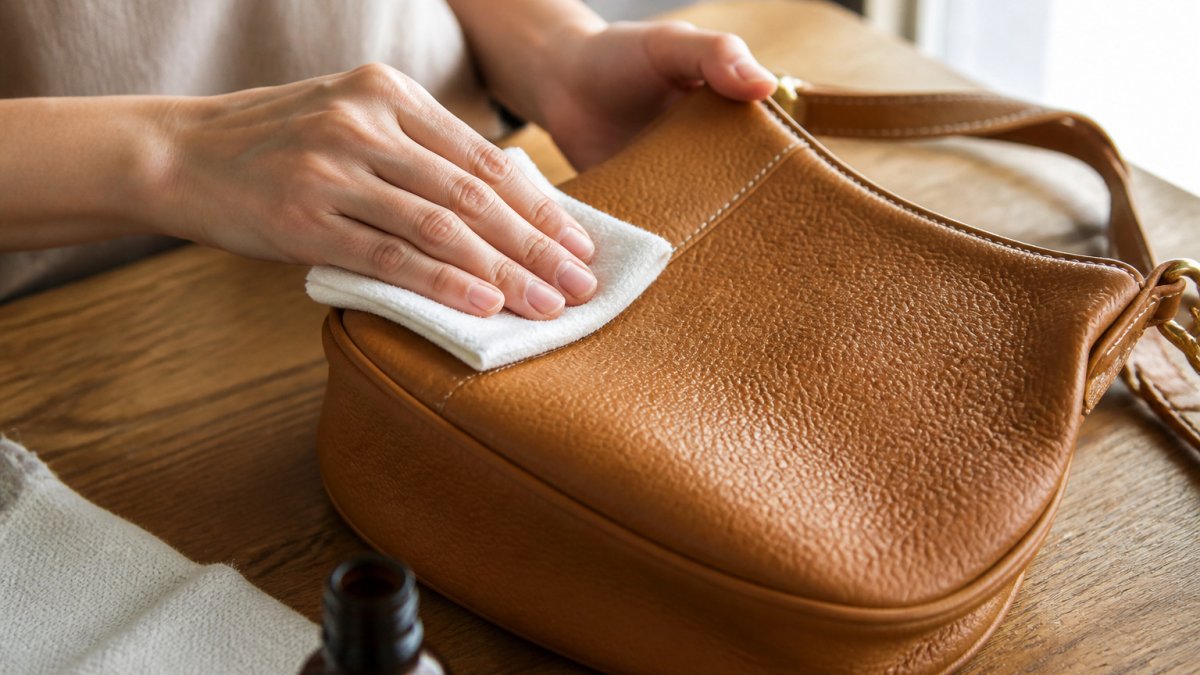
Once you know your leather type and have your kit ready, work through the exterior in a clear order.
-
Empty and set the bag on a clean, flat surface. Remove any items and open all pockets so you can see every part.
-
Brush off loose dirt. Use the soft brush in long, gentle strokes, following the direction of the grain. Pay extra attention to seams, edges and textured areas.
-
Dampen a cloth lightly. Wring it out well so it is barely damp, not wet. Excess moisture is a common cause of water marks and swelling.
-
Wipe the exterior in sections. Work from the top down, using small circular motions. Rinse and re-wring the cloth often so you are not spreading dirt around.
-
Use a cleaner only where needed. For stubborn grime, apply a small amount of mild leather cleaner to the cloth, not the bag. Wipe in small sections.
-
Dry with a clean, dry cloth. Remove any moisture straight away. Leave the bag to air-dry at room temperature, away from heat and direct sunlight.
-
Condition once fully dry. Apply a thin layer of conditioner with a clean cloth, then buff gently. Allow it to absorb before using the bag again.
Watch out: Never scrub hard or soak the leather.
The Vintage Burberry Pebbled Leather Flap Shoulder Bag in tan has a pebbled finish. You can view it here.

The exterior cleaning process breaks down into seven steps, each with a clear action to follow.
Vintage Burberry Pebbled Leather Flap Shoulder Bag, Tan, Pre-Loved →
| Step | What to do | Time or frequency |
|---|---|---|
| 1. Empty and set bag down | Remove items and open all pockets | Before starting |
| 2. Brush off loose dirt | Long, gentle strokes following the grain | Soft brush |
| 3. Dampen a cloth | Wring until barely damp, not wet | Lightly damp |
| 4. Wipe in sections | Work top down in small circles | Rinse cloth often |
| 5. Use cleaner only where needed | Apply mild cleaner to cloth, not bag | Small sections |
| 6. Dry with clean cloth | Air-dry at room temperature | Away from heat and sun |
| 7. Condition when dry | Thin layer, buff gently | Once fully dry |
How to Clean Leather Bag Interiors, Linings and Hardware
The inside of a pre-loved bag often holds more problems than the outside. Dust, old lining wear, and metal hardware all need a different approach.
Interiors and linings:
- Turn the bag inside out if the construction allows, and shake out crumbs and dust.
- Use a dry soft brush or a hand vacuum on a low setting to lift loose debris.
- For fabric or suede linings, avoid liquid cleaners. Spot-clean only with a barely damp cloth and let it dry completely.
Hardware:
- Clasps, zips and buckles can be wiped with a dry cloth to remove grime.
- For tarnished metal, use a cloth lightly dampened in mild soap, then dry it.
- Keep cleaner and moisture away from painted or plated pieces, which can flake.
Clean the interior and hardware before you condition the outside, so any loose residue does not transfer onto the leather.
How to Clean Leather Purse Stain Removal by Type
Stains need a targeted approach. Identify the type of mark first, then choose the gentlest method that could work, and always test first. Here is a stain-by-stain guide for common problems on pre-loved leather bags.
- Water marks: These often appear as dark rings after a drop of water dries. Let the bag dry naturally at room temperature, do not use heat. Once dry, lightly buff the area with a dry cloth. If the mark persists, dampen a cloth with distilled water and wipe the entire panel evenly to blend the edges, then let it dry away from heat. Avoid re-wetting just the spot, which can worsen the ring.
- Oil or grease: Act quickly. Dab, do not rub, a small amount of cornstarch or talcum powder onto the spot to absorb the oil. Leave it for several hours or overnight, then brush off with a soft brush. For stubborn stains, repeat with fresh powder. Avoid using water, which can spread the oil.
- Ink: Stop and do not spread it. For fresh ink, use a cotton swab with a tiny amount of mild leather cleaner or isopropyl alcohol (test first) and dab gently from the outside of the stain inward. For old ink, a professional leather cleaner is often needed. Never rub, as this pushes ink deeper into the leather.
- Dye transfer from jeans or clothing: Use a dry cloth first to lift surface dye, then a cotton swab with mild leather cleaner, working carefully to avoid lifting the bag's own colour. Test on a hidden area first.
If a stain does not respond after one careful attempt, stop. Repeated scrubbing is the most common way people turn a small mark into a permanent one.
How to Clean Leather Bag at Home With Vinegar: When It Works and When It Doesn't
Vinegar comes up often in DIY advice, so it helps to understand where it fits. Vinegar is acidic, and that is exactly why it is risky on many leathers.
When it may be an option:
- On some sealed or finished leather, a very diluted mix of white vinegar and water, used sparingly on a test patch, may remove light grime and odour.
When to avoid it:
- On suede, nubuck, or any unsealed or delicate leather
- On dyed or painted finishes, which can lose colour
- On bags where you cannot confirm the leather type
Because guidance varies, a patch test is essential before any vinegar solution touches the bag. If the test area changes colour, darkens or feels tacky, do not continue. Rinse the cloth in clean water and let the bag dry, then consider a leather-specific cleaner instead.
How to Clean Second Hand Leather Purse Odors and Disinfect Safely
Musty smells and surface contamination are common in second-hand bags, especially after years in storage. Address odour and hygiene gently, since harsh disinfectants can damage leather.
Odour removal:
- Air the bag out in a dry, shaded, ventilated area for several days.
- Place a sealed container of baking soda or dry cornstarch inside the bag overnight, then shake out and brush away the powder.
- Avoid sealing a damp bag in a plastic bag.
Mould, mildew and pests:
- Visible mould or mildew on leather is a sign to take care. Brush off dry mould outdoors, away from your home, while wearing a mask and gloves.
- Do not try to disinfect heavy mould with strong chemicals. This can permanently damage the leather and harm your health.
- Check for signs of insects or pests in seams and linings, and isolate the bag from other items until it is clean.
A gentle approach:
- Use only a very lightly dampened cloth with mild cleaner on a test area first.
- Dry the surface straight away and condition once fully dry.
If mould is heavy, the leather is cracked, or you notice a strong persistent smell, a professional leather specialist is the safer choice.
Book Your Next Pre-Loved Bag Knowing How to Care for It
A pre-loved bag rewards careful, patient cleaning. Before you buy, read how to verify authenticity and buy safely online, which covers seller checks and fraud protection.
At Bagsational, we source and inspect our pre-owned pieces, so you can explore a curated collection of authentic bags. Explore the Prada Beige Saffiano Leather Pre-owned tote, the Louis Vuitton Alma BB Epi Leather Black Pre-owned, or the Chanel Lambskin Black Tote.


Frequently Asked Questions
How do you clean leather after thrifting?
Start by brushing off loose dirt and debris with a soft-bristled brush or dry cloth, paying attention to seams and corners where grime collects. Then identify the leather type, since finished and unfinished leathers react differently to moisture. Test any cleaner on an inconspicuous area first, wipe gently with a lightly dampened cloth, and let the bag air-dry away from direct heat. Finish by conditioning lightly so the leather does not dry out after cleaning.
Can you use dish soap to clean a leather bag?
A very mild soap can be used on finished leather, but it should be diluted heavily and applied on a cloth rather than poured or sprayed onto the bag. Strong detergents can strip the finish, leave residue, or dry the leather. Always patch test first on an inconspicuous area, rinse any soap off with a barely damp cloth, and avoid soaking the leather. For delicate or unfinished leather, a dedicated leather cleaner is the safer choice.
How do you remove stains from a leather purse?
Treat stains based on their type. Fresh surface marks often lift with a barely damp cloth and mild soap. Oil-based stains can sometimes be softened with a small amount of cornstarch left on for several hours before brushing it off. Ink or dye transfer needs a specialist product, and some stains may be permanent. Always test on a hidden area first, work gently, and stop if the color begins to transfer. Very large or deep stains are best assessed by a professional leather repairer.
How do you disinfect a second-hand leather purse?
Dust and wipe the exterior and interior first to remove visible dirt. For disinfection, a lightly dampened cloth with a small amount of diluted rubbing alcohol can be used on hard surfaces and hardware, but test it on a hidden spot first because alcohol can dull finishes. Avoid soaking the lining. If the bag has mold, mildew, or a persistent musty smell, clean the affected area carefully and allow it to air-dry fully in a ventilated space. Heavy contamination or pest damage may call for professional restoration.
