

Last Updated: October 23, 2026
Quick Summary
To safely buy luxury online, verify the seller's reputation and credentials, authenticate the specific item by examining craftsmanship and serial numbers, use secure payment methods like credit cards with buyer protection, and inspect your purchase thoroughly upon arrival. This approach protects you from counterfeits, fraud, and misrepresented items when you safely buy luxury online.
- Check seller reputation over years, not just recent reviews, and search for patterns of complaints about counterfeits or misrepresentation.
- Require third-party authentication certificates from recognized authenticators before purchasing pre-owned luxury items.
- Use credit cards instead of wire transfers or peer-to-peer apps, as they offer chargeback protection if you receive counterfeit goods.
- Examine craftsmanship details like stitch count, hardware weight, leather feel, and serial number format specific to each brand.
- Document everything with photos and keep seller communications to support disputes if the item arrives counterfeit or misrepresented.
Table of Contents
- How to Safely Buy Luxury Online: Protect Yourself at Every Step
- Step 1: Verify the Online Retailer and Seller Reputation
- Step 2: How to Authenticate a Designer Handbag Before Purchase
- Step 3: How to Spot a Fake Designer Bag: Red Flags to Watch
- Step 4: Questions to Ask Before Buying a Used Designer Bag
- Step 5: Pre-Owned Luxury Handbag Buying Checklist
- Step 6: Secure Payment, Fraud Protection, and Buyer Safeguards
- Step 7: Inspect Your Purchase and Know Your Return Options
- Frequently Asked Questions
How to Safely Buy Luxury Online: Protect Yourself at Every Step
Buying luxury handbags online carries real risks. Counterfeit items flood marketplaces. Sellers misrepresent condition. Payment fraud happens. But the rewards are equally real: access to rare designer pieces, steep discounts on authentic luxury, and the ability to shop from home.
The key is knowing exactly what to verify before you buy.
At Bagsational, we've personally sourced and inspected pre-owned designer handbags. We've learned what separates a safe purchase from a costly mistake.
According to Gitnux's Luxury Fashion Industry Statistics, online luxury sales reached €80 billion in 2023, representing 23% of the total luxury market. That volume has attracted bad actors. Your job is to stay on the right side of that divide.
Step 1: Verify the Online Retailer and Seller Reputation
Before you even look at a handbag, verify the seller. This is your first line of defense.
Start with the basics. Does the website look professional? Is it secure? Check the URL, it should start with "https://" and show a padlock icon. Hover over links to see where they actually go. Scammers often hide behind nearly-identical domain names.
Check seller credentials and history
Look for how long the seller has been in business. New sellers with perfect ratings are suspicious. Real sellers have mixed reviews over years.
Search the seller's name on Google. Add words like "scam," "fraud," or "counterfeit." Read the reviews on independent platforms, not just their own site.
Check social media. Established luxury retailers maintain active accounts. They respond to customer questions. They post regularly. A seller with no online presence beyond their shop is a red flag.
For marketplaces like consignment platforms, verify seller badges and certifications. These matter. A "verified seller" badge usually means the platform has vetted the person's identity and transaction history.
Look for authenticity guarantees and certifications
This separates trustworthy sellers from everyone else.
The best sellers offer authentication certificates. These come from third-party services that specialize in verifying luxury goods. Look for certificates from recognized authenticators.
Bagsational includes Entrupy certificates with many of our pre-owned designer handbags. This gives you proof that an expert has already verified authenticity. You're not taking our word for it, you have independent verification.
Ask sellers directly: Do they authenticate items before selling? What process do they use? A seller who can't answer these questions clearly isn't worth your money.
Look for return policies that mention authentication. If a seller won't take back an item that turns out to be counterfeit, walk away. A real seller stands behind their merchandise.
Step 2: How to Authenticate a Designer Handbag Before Purchase
You've found a seller you trust. Now authenticate the specific item.
Luxury handbags have dozens of authentication points. Counterfeiters get most of them right. They fail on the details. Your job is to spot those failures before you pay.
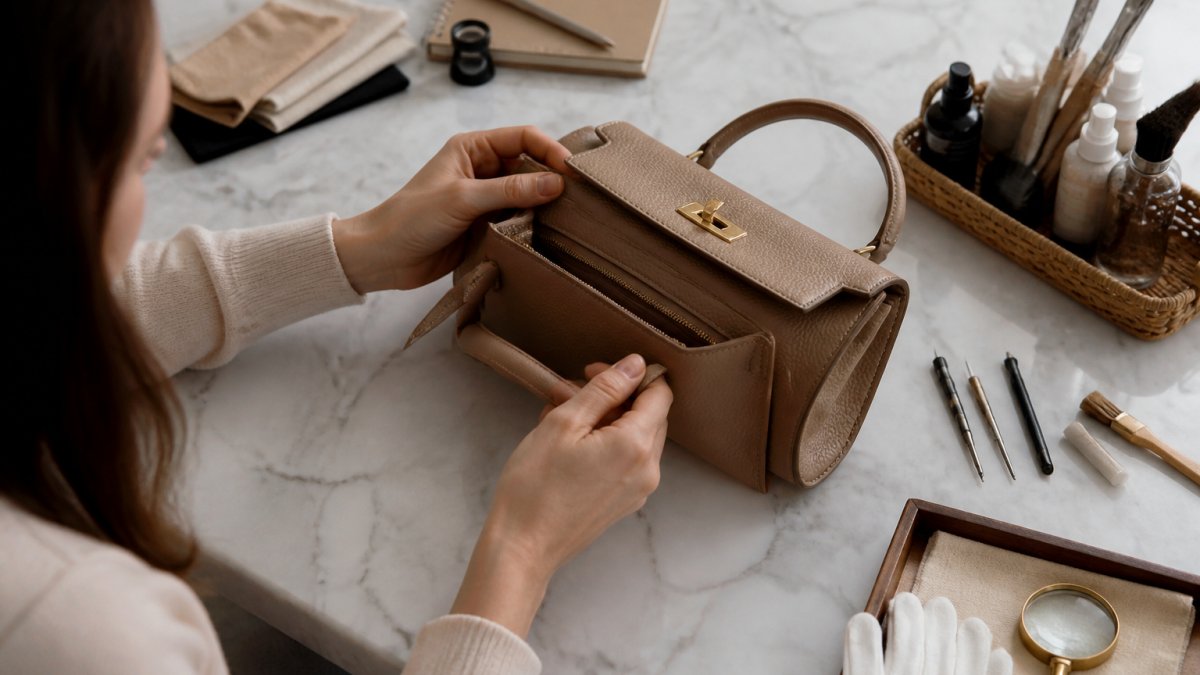
Examine craftsmanship and materials
Premium leather feels different. It's supple but structured. It has weight. Cheap leather feels thin or plastic-like. Run your eye along the seams. Authentic handbags have perfectly even stitching.
Look at the hardware. Authentic metal is smooth and heavy. Counterfeit hardware feels light and cheap. Zippers should glide smoothly without catching. Buttons and clasps should align perfectly.
The lining matters too. Designer handbags use quality fabric. It should feel smooth and durable, not thin or flimsy.
Smell the bag if possible. Authentic leather has a distinctive scent. Cheap leather or plastic smells chemical or off. This isn't foolproof, but it's a data point.
Verify serial numbers and proof of purchase
Every designer handbag has a serial number. Location varies by brand. Some are inside pockets. Others are on interior tags. The format is brand-specific.
Research your brand's serial number format before you buy. Know what it should look like. Counterfeiters often use random numbers or incorrect formats.
Ask the seller for a clear photo of the serial number. Cross-reference it against brand databases if they exist. Some brands maintain registries where you can verify ownership history.
Proof of purchase matters. Original receipts, authenticity cards, and dust bags all add credibility. These cost money to replicate, so counterfeiters often skip them.
Step 3: How to Spot a Fake Designer Bag: Red Flags to Watch
Certain warning signs scream "counterfeit." Learn to recognize them.
Prices that seem too good are usually fake.
Watch for vague product descriptions. Authentic sellers describe condition precisely. They mention wear, scratches, and color fading. Vague descriptions like "gently used" without specifics hide problems.
Photos matter enormously. Sellers should provide multiple angles, front, back, sides, interior, close-ups of hardware and stitching.
Misspellings and grammar errors in product descriptions are warning signs. Established luxury retailers employ people who can write.
Inconsistent branding is a killer. Logos should be identical across all items from the same brand. Font sizes, spacing, and alignment matter.
The packaging tells a story. Authentic dust bags, boxes, and authenticity cards have specific designs. Counterfeiters cut corners here.
Step 4: Questions to Ask Before Buying a Used Designer Bag
Before you commit, ask the seller specific questions. Their answers reveal a lot.
Ask about the bag's history. Where did you get this? How long have you owned it? Why are you selling?
Ask about condition. What damage does it have? Be specific. "Minor scuffing on the corners" is clear. "Some wear" is not. Ask about functionality.
Ask about authenticity. Has this item been authenticated? By whom? Can you provide proof?
Ask about the original purchase. Where was it bought? Do you have the original receipt? When was it purchased?
Ask about return policies. What happens if I receive the item and it's not as described?
Step 5: Pre-Owned Luxury Handbag Buying Checklist
Use this checklist before you buy. It covers every authentication and safety angle.
| Verification Step | What to Check | Red Flag |
|---|---|---|
| Seller reputation | Years in business, reviews, social proof | New account, no reviews, negative feedback |
| Authentication | Third-party certificate provided | No certificate or vague claims |
| Serial number | Matches brand format, visible and clear | Missing, blurry, or incorrect format |
| Craftsmanship | Even stitching, quality leather, smooth hardware | Uneven stitching, cheap materials, stiff zippers |
| Price | Matches market value for condition | Suspiciously cheap with no explanation |
| Photos | Multiple angles, good lighting, clear details | Blurry, limited angles, poor lighting |
| Description | Specific condition details | Vague language like "gently used" |
| Proof of purchase | Receipt, authenticity card, or documentation | None provided, seller refuses to show |
| Return policy | Money-back guarantee if counterfeit | No returns or authentication clause |
| Communication | Seller responds quickly and clearly | Slow responses or vague answers |
Go through this checklist before you hit "buy now." If more than two items raise concerns, skip this seller.
Step 6: Secure Payment, Fraud Protection, and Buyer Safeguards
How you pay matters as much as what you buy.
Use credit cards, not wire transfers or cryptocurrency. Credit cards offer chargeback protection.
Avoid payment methods that offer no buyer protection.
Use secure checkout systems. Reputable sellers use established payment processors like Stripe or PayPal.
Check your credit card's fraud protection before you buy.
Consider using buyer protection services. Some credit cards and payment platforms offer purchase protection that covers counterfeit goods.
Keep records of everything. Save the listing, the photos, the seller's communications, and the receipt.
Watch your accounts after purchase. Monitor your credit card for unauthorized charges. Check your email for suspicious follow-ups.
Step 7: Inspect Your Purchase and Know Your Return Options
The item arrives. Now what?
Open the package carefully. Take photos of everything, the box, the bag, the condition.
Compare the item to the listing photos. Does it match the description?
Inspect it thoroughly using the authentication checklist from Step 5. Check the serial number.
If anything seems off, get a professional authentication.
Test the functionality. Open and close zippers. Check pockets. Ensure everything works as described.
Review the seller's return policy immediately. How long do you have to return?
If the seller won't cooperate, escalate. File a dispute with your payment processor.
For Bagsational purchases, our pre-owned designer handbags come with an authenticity guarantee.
Frequently Asked Questions
How can I tell if a luxury handbag is authentic when buying online?
Verify authenticity by examining craftsmanship quality, checking serial numbers, and reviewing high-resolution product photos. Look for consistent stitching, premium leather or materials, and proper hardware weight. Reputable sellers provide certificates of authenticity from third-party authenticators like Entrupy. Compare the listing photos against official brand references, and ask the seller for close-up images of the interior label, serial number, and any wear patterns. Authentic designer items show evidence of quality construction and precise detailing that counterfeit replicas cannot replicate.
What payment methods offer the most protection when buying luxury goods online?
Credit cards and PayPal offer the strongest buyer protection through chargeback options and dispute resolution. These payment methods allow you to reverse fraudulent transactions or request refunds if an item arrives counterfeit or not as described. Avoid wire transfers or direct bank payments, which offer no recourse. Use secure checkout systems that encrypt your financial data. Check that the retailer displays security badges and uses HTTPS encryption. Document all communications with the seller and keep proof of purchase, as these strengthen your case if you need to file a dispute.
What should I check before buying a pre-loved designer handbag online?
Request multiple high-quality photos showing the front, back, interior, serial number, hardware, and any signs of wear. Ask about the bag's condition rating, original purchase date, and reason for resale. Verify the seller's return policy and whether they offer an authenticity guarantee. Check their history of sales and customer feedback. Confirm the bag's dimensions match your needs and review the materials used. Ask about the certificate of authenticity, dust bag, and original packaging included.
Is it safe to buy from resale marketplaces and consignment sites for luxury handbags?
Yes, if you verify the seller's credentials and the platform offers buyer protection. Established resale marketplaces typically vet sellers and provide authenticity guarantees, making them safer than private sales. Check the platform's authentication process, return policy, and dispute resolution procedures. Look for sellers with high ratings and positive reviews from multiple buyers. Verify that the platform uses secure payment processing and offers insurance or protection against counterfeit items. Always review product photos carefully and communicate directly with the seller about condition and authenticity before committing to purchase.
Buying luxury online doesn't have to be risky. Verify the seller. Authenticate the item. Use secure payment. Inspect carefully. Follow these steps and you'll confidently invest in authentic designer handbags at a fraction of the original price. At Bagsational, we've built our reputation on this process. Every piece in our collection is personally sourced, thoroughly inspected, and backed by third-party authentication. Shop with confidence knowing you're getting verified luxury, not counterfeits.
