

Table of Contents
- What Makes a Sustainable Luxury Handbag Worth Your Investment
- Sustainable Handbag Materials: What to Look For and Why It Matters
- How to Authenticate a Designer Handbag: A Practical Verification Checklist
- Evaluating Ethical Production: Fair Labor and Artisan Craftsmanship
- Cost-Per-Wear and Long-Term Value: Why Pre-Loved Luxury Makes Financial Sense
- How to Care for a Luxury Handbag to Maximize Its Lifespan
- Building Your Sustainable Luxury Collection: A Step-by-Step Framework
- Frequently Asked Questions
Last Updated: October 21, 2026
What Makes a Sustainable Luxury Handbag Worth Your Investment
A sustainable luxury handbag aligns your spending with your values while securing a piece that outlasts trends. The difference from a conventional bag comes down to traceability, materials sourcing, production transparency, and longevity.

The investment case rests on three pillars: environmental impact reduction, ethical labor practices, and exceptional durability.
What separates a true investment piece from a trend-driven purchase is intentionality. A sustainable luxury handbag should feel timeless the moment you carry it. Craftsmanship shows in the weight of the leather, the precision of the stitching, and the quality of the hardware.
Sustainable Handbag Materials: What to Look For and Why It Matters
Understanding materials is the foundation of a sustainable choice. Every material carries environmental and ethical consequences across its lifecycle, and the best sustainable luxury handbag balances durability, traceability, and honest impact accounting.
Responsibly Sourced Leather and Its Impact
Leather remains the gold standard for luxury handbags because of its durability, patina development, and repairability.
The critical question is where that leather comes from and under what conditions it was produced. Responsibly sourced leather begins with traceability: you should be able to identify the tannery, understand their chemical processes, and verify their labor practices.
When evaluating a leather handbag, new or pre-loved, look for supply chain transparency: responsible brands publicly name their tanneries and publish their standards. The leather itself should feel substantial and develop a natural patina.
Plant-Based and Recycled Alternatives
Plant-based materials like mushroom, apple, and cactus leather offer compelling sustainability narratives but come with caveats. They reduce dependence on animal agriculture and can use less water than conventional leather, but many still rely on synthetic polyurethane backings and aren't biodegradable, a different tradeoff rather than a clear win.
Recycled materials, from metal hardware to canvas and nylon, address waste by giving existing materials a second life.

When comparing materials, ask: What will this bag look like in five years? Can it be repaired?
How to Authenticate a Designer Handbag: A Practical Verification Checklist
Authentication is where theory meets reality. Before investing in a pre-loved luxury handbag, you need concrete, verifiable signals that the piece is genuine, because counterfeit luxury goods fund organized crime and exploit labor.

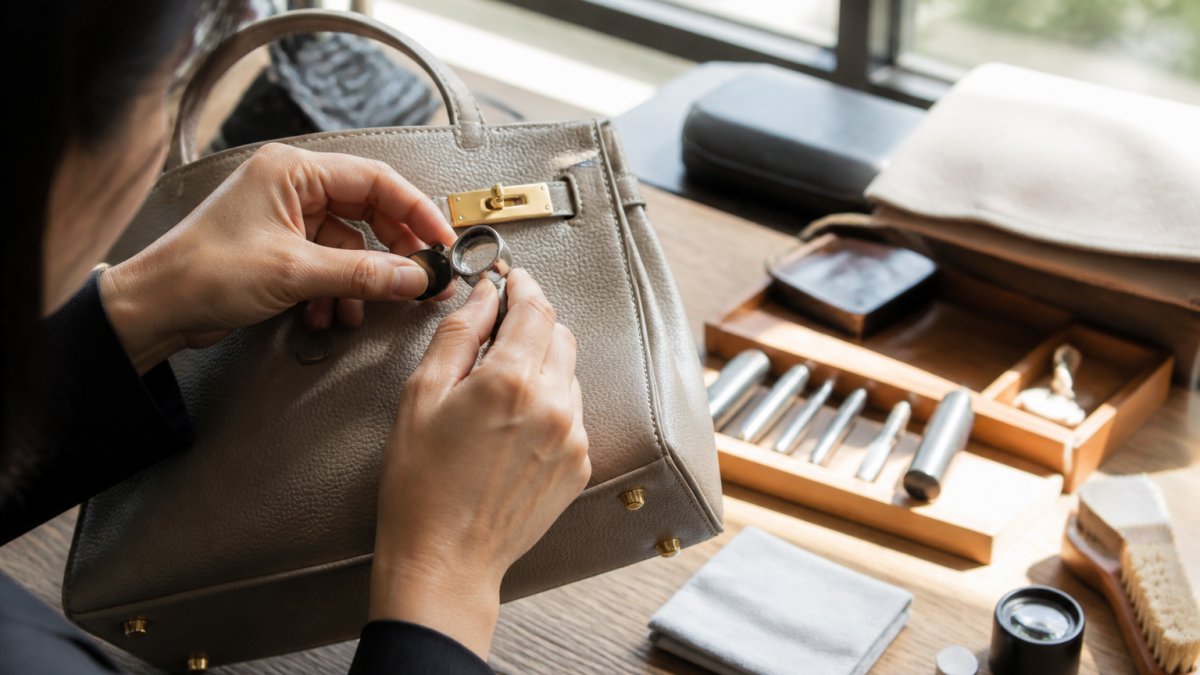
Stitching, Hardware, and Craftsmanship Signals
Authentic luxury handbags exhibit consistent, precise stitching. Counterfeits often have uneven stitch lengths, wobbly lines, or skipped sections. Run your finger along the seams, genuine stitching feels deliberate and uniform, and the thread color should match the leather or fabric precisely.
Hardware, clasps, D-rings, feet, zippers, tells a story. Authentic brands use high-quality metals that won't tarnish or chip; counterfeits often use cheap metal that feels hollow. Engraved or embossed logos should be crisp and deep, and zippers on authentic bags glide smoothly and are often branded.
Overall construction should feel intentional: seams reinforced where stress occurs, patterns lined up at seams, pockets securely attached. These details prove the bag was engineered to last.
Tracing Supply Chain and Brand Transparency
Authentic brands increasingly provide documentation of their supply chain, including certificates of authenticity, serial numbers, or digital verification systems. If you're purchasing from a reseller like Bagsational, ask for documentation: Has the bag been authenticated by a third party?
Material traceability matters as much as construction. A genuine luxury handbag has a story: where the leather came from, which tannery processed it, which factory assembled it. If a seller can't trace the bag's origin or seems evasive about provenance, walk away.
Serial numbers and date codes are powerful verification tools. Most luxury brands embed a production date or serial number inside the bag, usually embossed on a leather patch or printed on a tag.
Evaluating Ethical Production: Fair Labor and Artisan Craftsmanship
Ethical production isn't a marketing buzzword, it's a measurable commitment to fair wages, safe working conditions, and workers' rights.
Brands committed to fair labor practices publish their factory locations, worker wages, and safety standards. Some work with third-party auditors to verify compliance.
Artisan craftsmanship is where fair labor and quality intersect. Handmade or hand-finished bags represent significant human investment, skilled workers spending hours on a single piece, which is why they command premium prices.
When evaluating production practices, ask: Does the brand name specific factories or artisans? Do they publish worker welfare information? Brands that hide their supply chain often have something to hide.
Cost-Per-Wear and Long-Term Value: Why Pre-Loved Luxury Makes Financial Sense
The math of sustainable luxury handbag investment is straightforward: a pre-loved designer bag purchased at a fraction of retail price, used for years, and potentially resold at minimal loss represents exceptional value-per-wear.
Consider a concrete example. A new luxury handbag might retail for $2,000; a pre-loved version of the same style in excellent condition might cost $400 to $600.
Pre-loved luxury also protects you from trend risk.
The sustainability angle reinforces the financial case. Every pre-loved bag purchased is one fewer new bag requiring manufacturing, shipping, and marketing resources.
How to Care for a Luxury Handbag to Maximize Its Lifespan
A sustainable luxury handbag only stays sustainable if you maintain it properly. Proper care extends the lifespan by years and preserves resale value, making maintenance an investment multiplier.
Start with storage. Store your bag in a cool, dry place away from direct sunlight, in dust bags or breathable fabric covers, never plastic, which traps moisture.
Spot cleaning is routine maintenance. For leather, wipe surface dust with a soft, damp cloth; for stubborn marks, use a leather cleaner formulated for the specific leather type (aniline, semi-aniline, or pigmented).
Chloé Marcie Raffia Basket Tote with Leather Panel, Pre-Loved →
Handle zippers with care, they're often the first thing to fail.
Watch for wear patterns, starting with handles and straps.
Building Your Sustainable Luxury Collection: A Step-by-Step Framework
Building a collection of sustainable luxury handbags doesn't mean accumulating dozens of pieces. It means curating a selection of timeless styles in versatile colors that work across your lifestyle and aesthetic.
Assessing Your Needs and Style Priorities
Start by honestly evaluating how you actually use handbags. Do you need a structured work tote for a laptop and documents, a crossbody for hands-free carrying, an evening clutch, or a casual weekender? Your collection should reflect your real life, not an aspirational one.
Next, identify your color palette. Neutral tones, black, tan, cognac, navy, cream, work across seasons and outfits. These are the foundation pieces. From there, add one or two accent colors that genuinely excite you and coordinate with your wardrobe.
Consider size strategically. A medium-sized bag (roughly 12-14 inches wide) handles most daily situations, smaller bags work for evenings or minimal-carry days, and larger bags suit travel or work.
Comparing New, Repaired, and Pre-Loved Options
This is where your sustainable luxury handbag strategy crystallizes. For each piece you want to add, evaluate three options:
New from the brand: Full price, complete warranty, current production standards, and the newest designs. Buy new for a specific current collection piece or when you prioritize the unboxing experience and factory-fresh condition.
Pre-loved from a trusted source: Typically 40-60% of retail, proven durability and timelessness, and immediate availability.
Repaired or vintage: Often the deepest discount, unique character and patina, and genuine history. Vintage bags require more due diligence: condition assessment, potential restoration costs, and authenticity verification are critical. This path appeals to collectors who enjoy the hunt and restoration process.
For most sustainable luxury handbag shoppers, a mix of pre-loved and occasional new purchases creates the ideal collection. Pre-loved pieces let you build breadth without overspending; new purchases reward yourself for milestone moments or special collections you genuinely love.
Making Your Purchase with Confidence
Before committing to any handbag purchase, verify these elements:
Authenticity: If buying pre-loved, confirm the seller has authenticated the piece. Ask for detailed photos of serial numbers, construction details, and any certificates. Bagsational includes Entrupy Certificates of Authenticity on select pieces, providing third-party verification.
Condition accuracy: Request photos from multiple angles, front, back, interior, close-ups of any wear.
Return policy: Confirm you can return or exchange the bag if it doesn't meet your expectations.
Price alignment: Research comparable pieces in the same condition to ensure you're paying fairly. Pre-loved luxury pricing varies by brand, condition, rarity, and market demand.
Personal fit: Carry the bag (or imagine carrying it if shopping online) and ask: Does this work for my lifestyle? Will I actually use it?
Investing in a sustainable luxury handbag means choosing quality over quantity and aligning your consumption with your values.
| Decision Criteria | New Purchase | Pre-Loved (Bagsational) | Vintage/Repaired |
|---|---|---|---|
| Price Point | Full retail | A fraction of retail | Deepest discount |
| Authenticity Verification | Brand guarantee | Third-party certified | Requires expert assessment |
| Condition | Factory-fresh | Excellent to very good | Variable; may need restoration |
| Availability | Current collections | Curated, personally sourced | Hunt-based, limited inventory |
| Best For | Specific current styles | Building sustainable collection | Collectors seeking unique pieces |
FTC guidance on authenticating luxury goods
Sustainable Apparel Coalition's Higg Brand and Retail Module
Ellen MacArthur Foundation report on circular fashion and material lifecycles
Frequently Asked Questions
What makes a luxury handbag sustainable?
A sustainable luxury handbag combines responsible material sourcing, ethical production practices, and longevity. Look for brands using responsibly sourced leather, recycled or plant-based materials, and transparent supply chains with fair labor standards. Pre-loved designer bags are inherently sustainable because they extend a bag's lifecycle and reduce demand for new production, lowering environmental impact while maintaining quality craftsmanship.
How can I check whether a pre-loved designer handbag is authentic?
Examine stitching consistency, hardware weight and finish, leather grain patterns, and interior stamps or tags specific to the brand. Research the designer's production practices for that era, details change over time. Check for material traceability through documentation or certificates of authenticity. Verify the bag's construction quality against known examples, and ask the seller for detailed photos of wear patterns and provenance. Reputable sellers provide this information upfront.
Are pre-owned designer handbags more sustainable than new ones?
Yes. Pre-owned bags eliminate the environmental cost of new production, including raw material extraction, manufacturing, and shipping. They extend a bag's total lifecycle, reducing waste. A well-maintained pre-loved luxury handbag often outlasts multiple new bags, making it a lower-impact choice. However, sustainability also depends on the original materials and production practices. A pre-loved bag made from responsibly sourced leather or recycled materials carries even greater environmental benefit than a pre-loved bag made from conventionally sourced materials.
Which handbag materials are considered more sustainable?
Responsibly sourced leather from certified tanneries minimizes environmental harm. Plant-based materials like mushroom leather or cork offer vegan alternatives with lower water footprints. Recycled metal hardware and upcycled fabrics reduce waste. Canvas and other durable plant fibers are sustainable when sourced responsibly. Avoid materials with unclear supply chains or high environmental costs. Ask sellers about material sourcing and look for certifications. The most sustainable material is one that lasts decades, durability matters more than material type alone.
How should I care for a luxury handbag to make it last?
Store your bag in a cool, dry place away from direct sunlight to prevent fading and leather cracking. Spot clean with a soft, dry cloth; avoid harsh chemicals. Use a leather conditioner every 6-12 months to maintain suppleness. Keep the bag structured with tissue paper inside, and avoid overstuffing. Handle the straps gently to prevent stretching. For scuffs or damage, consult a professional leather repair specialist. Proper care extends your bag's life significantly, making it a true investment piece and reducing the need for replacement.
Is buying a second-hand luxury handbag worth it?
Yes, if authenticity and condition are verified. Pre-loved luxury bags from trusted sellers offer significant savings, a fraction below retail, while maintaining craftsmanship and durability. You gain access to discontinued or rare styles unavailable new. The cost-per-wear becomes exceptional over time. Verify authenticity through detailed inspection, seller credentials, and certificates of authenticity. Check condition reports carefully and understand the return policy. For eco-conscious shoppers, the sustainability benefit adds additional value beyond the financial savings.